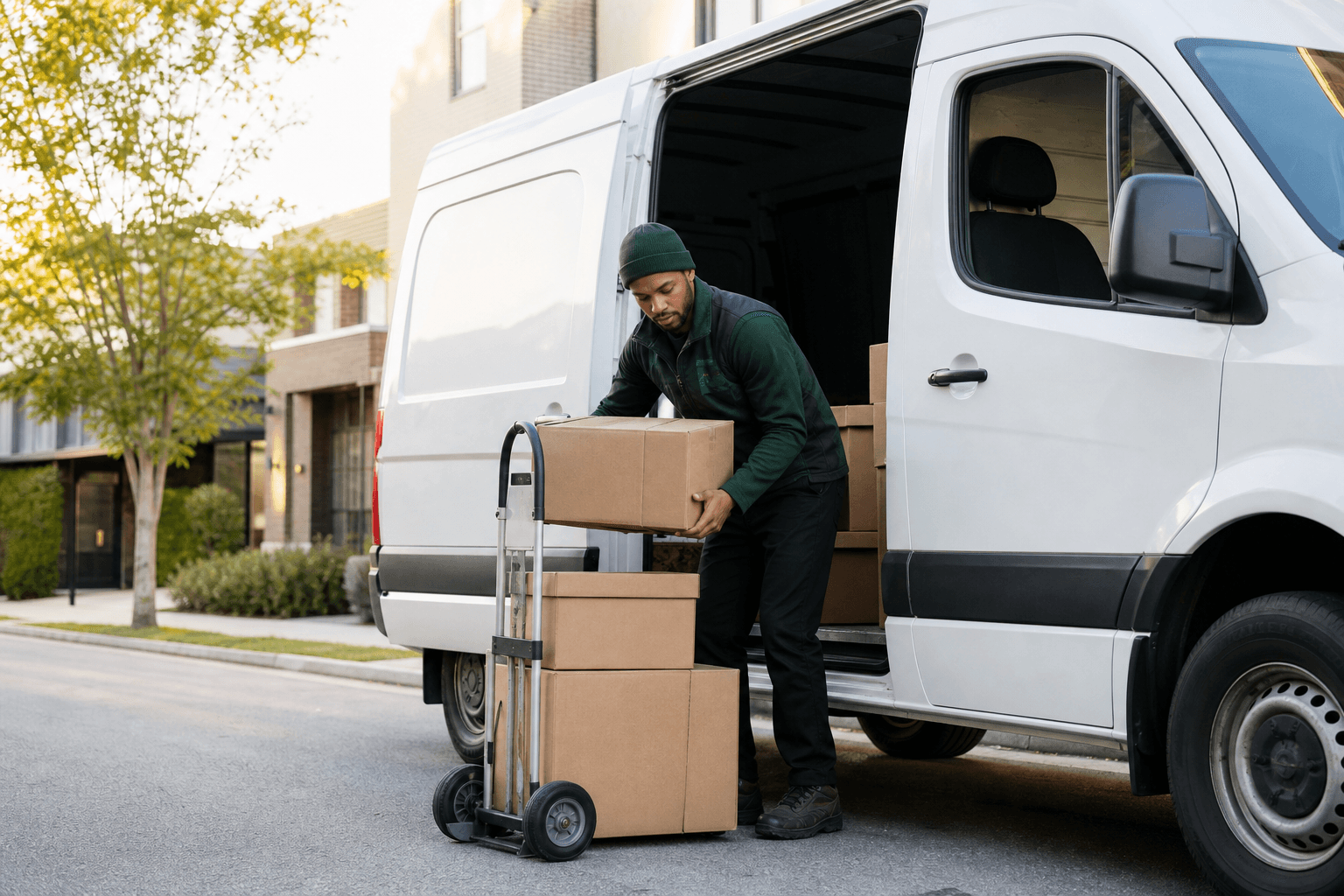
Last-mile needs its own operating story.
The driver is in and out all day
Stop density, package handling, surfaces, stairs, weather, animals, and customer locations can matter as much as total miles.
The contract shapes the operation
Identify the fulfillment center, parcel customer, DSP-style or contractor relationship, route expectations, vehicle requirements, and who controls daily work.
The code changes across models and states
Traditional trucking, retail home delivery, courier or messenger work, and fulfillment-center delivery may not share one classification.
Start with the operating story.
We will consider employee-driver last-mile and parcel-delivery opportunities when the account clearly explains the contract, routes, vehicles, hiring, package handling, losses, and current controls.
- Delivery customer or contract model, fulfillment-center relationship, territories, and states
- Stops per route, miles, package count and weight, stairs, apartments, and seasonal peaks
- Employee or contractor status, driver tenure, hiring, MVR, training, ride-alongs, and supervision
- Vehicle ownership, maintenance, telematics, distracted-driving, backing, and route-pressure controls
- Collision, strain, slip-and-fall, animal, and other losses plus the response to each pattern
7219, 7197, 7231—or another code?
The number cannot be chosen from the brand name on the packages. For example, New York distinguishes trucking for others, retail-store home delivery, and local messenger or parcel work, while fulfillment-center contracts may route differently. The applicable bureau, carrier, and actual duties determine the final classification.
What helps us review the opportunity
Last-mile delivery combines driving, frequent stops, package handling, time pressure, and changing routes. Review improves when the submission distinguishes employees, contractors, fleet arrangements, territories, and client requirements.
Tell the exposure story
- Driving frequency and delivery density
- Package weight and material handling
- Vehicle ownership, maintenance and telematics
Questions worth answering
- Who owns and maintains vehicles?
- What is the maximum package weight?
- How are routes, speed and distracted driving monitored?
What to send if you have it
- Payroll and headcount by role and state
- Fleet, territory and delivery-client details
- Driver selection and safety controls
- Loss runs with collision and strain analysis
Start with what you have
Upload the available application, loss runs, supplemental, and mod worksheet, or complete the short online form. Missing items do not stop the first conversation; we will tell you what is needed next. Your existing agent can remain involved.